I know almost nothing about baseball. I'm building a baseball prediction AI anyway.
Week 1 of a 10-week build-in-public series on what one person can actually ship with Claude Code.


I was playing around with Claude Code and kept thinking: what can one person actually ship with this now?
Not as a demo. As a real thing.
I started thinking about what I could do to take advantage of the capabilities of AI to create a cool experiment. Not a business, just learning — in a data-rich area, where I could also use unstructured data like news about injuries, squads, and so on. A domain that was:
- Quantitative enough that an AI could actually reason about it with data.
- Unfamiliar enough to me that I couldn't quietly steer it with my own intuition.
- End-to-end — something I could build, test, and put in front of real users, not just a notebook.
I picked baseball because it's very quantitative, and because it's relatively easy to get historical data. And I know almost nothing about it.
That last part is the point. If I knew baseball, I'd spend the whole project second-guessing the model. By being a near-outsider, I'm forced to interfere as little as possible — let the system do the reasoning and just evaluate the output honestly.
The first version I started building was a betting agent.
The reference point in my head was Moneyball. A small-budget Oakland A's team used quantitative analysis to build a roster nobody respected, strung together one of the longest winning streaks in MLB history, and permanently changed how every team in the league thinks about roster construction.
That happened with spreadsheets and a few contrarian scouts.
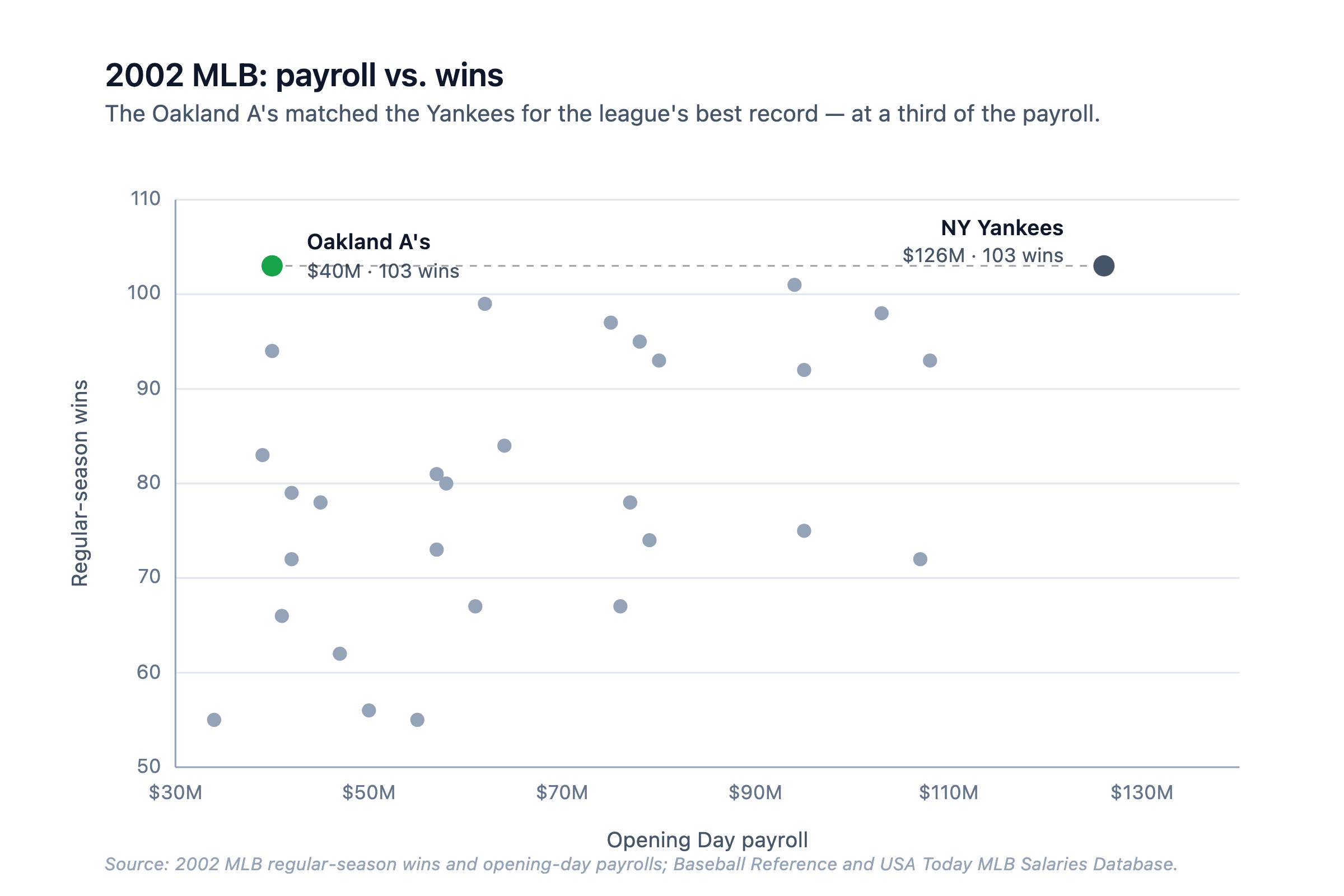
I wanted to see what's possible now — with modern ML, an LLM in the loop, and one person.
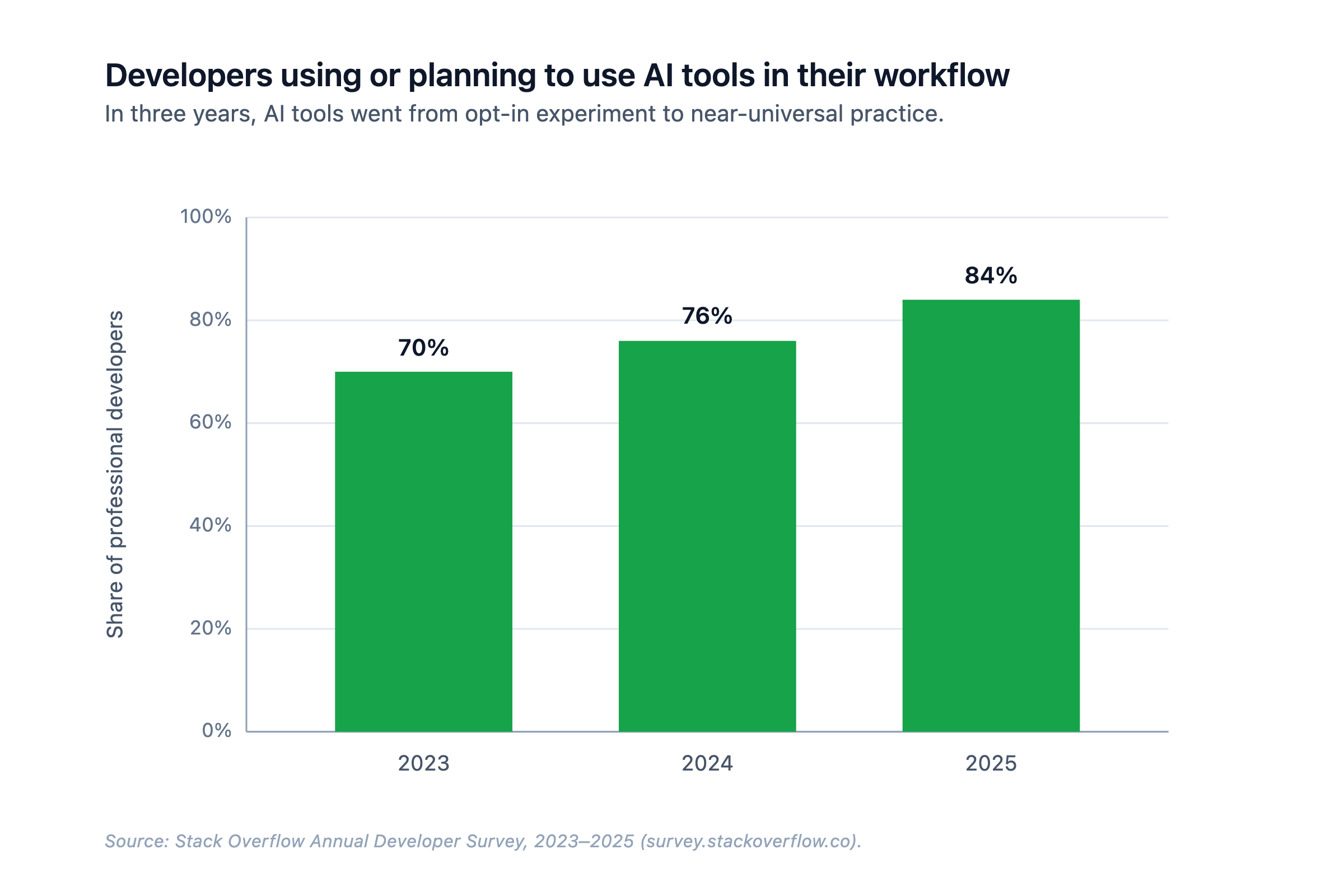
The tooling shift isn't hypothetical. The share of professional developers using or planning to use AI tools went from 70% to 84% between 2023 and 2025 — AI-assisted development is no longer a niche workflow, it's the default.
So I asked Claude a blunt question: Is this actually technologically feasible for one person to build end-to-end — structured stats, unstructured news, the full pipeline — in a reasonable amount of time?
The answer was yes. So I started.
As an experiment. Not a company. Not a side hustle. An experiment to see what happens when you take a quantitative domain you don't know, hand it to a modern AI stack, and ship.
Along the way the project pivoted hard — more than once — in ways that changed what the product even is. There's been a legal surface to think through. UX decisions I didn't expect. A naming problem I'm still solving.
I'll walk through all of it here over the next ~10 weeks.
The thesis of the series: what can one person with these tools actually ship? Not the hype-cycle version, the real one. Where the friction is. Where the AI is genuinely carrying weight. Where it isn't.
The project has a name — I'm calling it "Project X" publicly for now while the trademark paperwork is in flight. Name reveal later in the series.
Things I'll cover over the coming weeks:
- The pivot from a betting agent to something very different (and why)
- The data stack — how I combined structured stats with unstructured news signal
- Working with Claude Code as the primary engineer
- The legal and compliance surface I didn't expect
- The UX decisions that changed the product
One of the real questions I'm trying to answer is whether this should exist as a product at all, or whether the experiment itself is the deliverable. I genuinely don't know yet. That's the point of doing this in the open.
If you want to follow along, the posts will land here weekly. Subscribe and I'll send them as they go out.
If you've built anything comparable — or tried to — I'd like to hear what broke first.
These are personal notes from a side project I'm pursuing on my own time with my own resources. The views here are my own and are not connected to, endorsed by, or representative of my employer or any of my professional work.